15 Yoga Exercises for Baby Boomers Born Between 1946 – 1964
There are about 74 million Baby Boomers currently redefining what it means to live in the golden years. This massive generation may be living the most active retirement of any generation yet! While they’re exceptional in so many ways, no one can escape the stiffness, aches and pains that come along with aging. That’s why there’s yoga.
Yoga is a fantastic way to keep joints healthy, relieve back pain, maintain flexibility and even improve balance . Joining a studio or an exercise class is also a great way to find a social community. Try working in about 30-60 minutes on the mat 1-3 times per week. You can start noticing benefits almost instantly!
It’s important to be mindful of your form and respect your body’s limits. In addition to a mat, there are certain props and tools that can help you get into the poses safely. This method is Supportive Yoga, and it’s great for beginners of all ages, including baby boomers.
Here are some recommendations to help you have a successful exercise session:
A block is a small foam block that can be used to modify certain poses when you have limited flexibility. Having two blocks is recommended. That way you’re able to maintain symmetry by having one block on each side for certain poses.
Straps are thick fabric straps that are used to help you get leverage for certain poses. We suggest getting a strap that connects back on itself with an adjustable closure that forms a circle. These types of straps can be easier to use, especially if you have any issues with grip or arthritis in your hands.
A bolster is a small pillow that can be used to elevate your hips, align your back, or cushion your head and neck. Bolsters are a wonderful tool, especially for those who have back or hip issues.
Here are 15 poses or “asanas” that are perfect for Baby Boomers.
Legs-Up-the-Wall Pose is an easy, effective pose for giving you energy and improving circulation. It can also help improve your flexibility over time. Here’s how to do it:
You can adjust your position until you’re comfortable, but try to have your sit bones as close to the wall as you can comfortably get. You may want to use a bolster under your hips. Your back should be flat on the mat with a straight alignment from your neck down.
When it’s time to come out of the position, gently remove the bolster if you use one. Then allow your legs to slowly come down to one side. Stay in the side position for a few breaths so you don’t get lightheaded. Then gently sit up.
Reclining Big-Toe Pose stretches a good section of your posterior chain. It’s great if you have tight legs and lower back. To do Reclining Big-Toe Pose:
Once you’re finished, release the leg and repeat on the other side. This is one of those poses where a prop – the strap – can really help you. Make sure to keep your back flat on the floor and don’t curl your neck up.
Tree Pose is a wonderful hip opener and helps you work on your balance.
Repeat this on both sides. If you can’t bring your foot all the way up to thigh height, don’t worry. Just do what you can.
Also, if you lose your balance, don’t worry! It’s all part of the process. Just breathe and reset.
Use Cobra Pose to open the chest, abdominals, neck, low back, and even hips! This is a great restorative pose because you can go as shallow or deep into the pose as your strength and flexibility allow. Here’s how to do it:
This pose feels so good you may want to do it 2-3 times. Each time you’ll be able to go a little deeper into the stretch as your body opens up. You can also gently look up to add a stretch to your neck, but be careful not to strain.
Downward Dog is a classic pose that works on nearly every part of the body. Note that are a baby boomers with pain or arthritis in your wrists, then you may want to skip this pose.
Once you’re in Downward Dog pose you can bend your knees one by one to stretch out your calves and work your heels toward the ground.
The Warrior pose series is great for balance and opening up tight hips. Warrior I is the first pose in the series. You can come into Warrior I from a lunge position.
If you want to keep the series going, transition into Warrior II…
Warrior II is the next progression in the Warrior pose series. Starting from Warrior I with right foot forward:
Repeat on the other side. If you lose your balance, that’s ok! Just work yourself back into the pose. You can go back to Warrior I or into Triangle Pose.
You can get into Triangle Pose from a standing position (Mountain Pose) or from the Warrior poses. Here’s how:
As with any pose, only go as far as your body will allow. As you repeat the pose over time you’ll see changes in your flexibility and strength that let you get further into the pose.
Cat-Cow is a nice way to stretch your spine. This can be done in a pose sequence or even in bed when you wake up. Rise and shine, Baby Boomers! To do Cat-Cow Pose:
This is a lovely breathing exercise and a nice, gentle way to stretch the spine.
Happy Baby Pose is named because it mimics a natural position that babies love – and Baby Boomers will too!
You can hold still in the position or gently rock side-to-side and straighten and bend the knees. This is a great pose to get into certain tight spots in the hips and also gently massage the low back.
If your knees allow, Child Pose is a wonderful restorative pose to relax and stretch the back and shoulders.
You can hold this pose for as long as you need to. If you have tight or troublesome knees, try using a block under your sit bones to elevate the hips.
Reclining twists are a great way to stretch the back gently. They couldn’t be easier! Just remember to respect your body’s boundaries and only go as far as you comfortably can.
Breathe into the twist and feel your breath create space in your ribs and spine.
This is another amazing restorative hip opener. Use a bolster along your spine for an added boost.
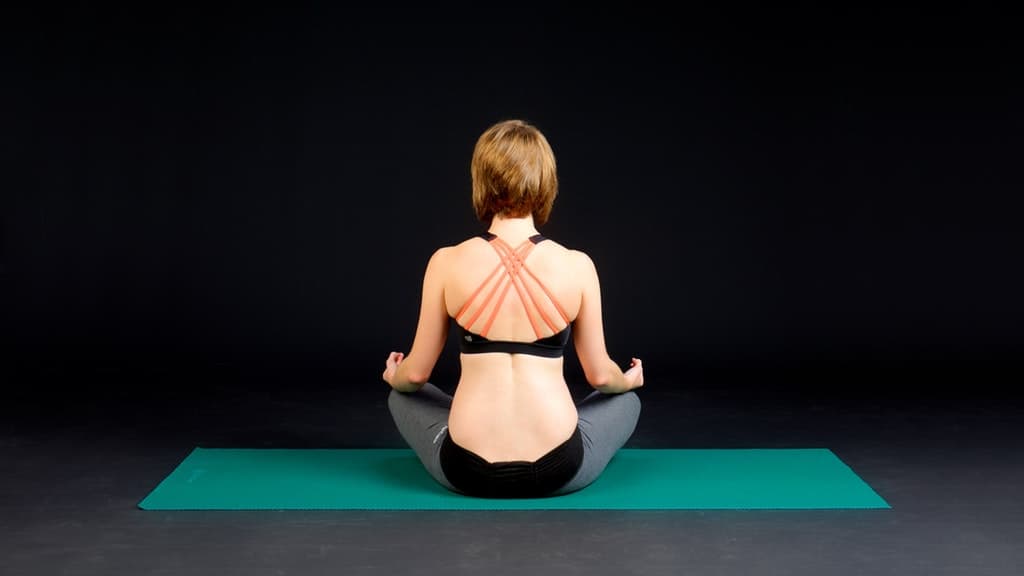
Easy Pose is a fundamental for everything from starting a practice to meditation. It’s great for spinal strength and improving posture. Just be cautious if you are a baby boomer with knee or hip issues.
From this basic pose, you can do place your hands on your knees, in your lap, or in prayer position depending on what you’re doing in Easy Pose.
Just about every class ends with this ultra-relaxing pose. Corpse Pose is intentionally done at the end of the pose sequence to allow the body to get back to equilibrium and give you a moment to clear your mind into full relaxation.
We hope you enjoy these 15 yoga poses for Baby Boomers. Remember to always respect your body and use props if needed to help maintain proper form. And let us know which one of these poses is your favorite!
Related Articles